
See the whole month at once
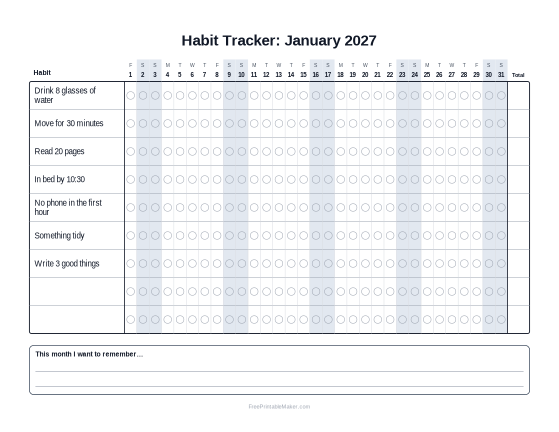
The appeal of a monthly tracker is the pattern it builds. A row of filled boxes is motivating, and the gaps tell you something too. You might notice that the evening walk disappears every Wednesday, or that reading only happens at weekends. A daily app rarely shows you that at a glance.
Setting it up
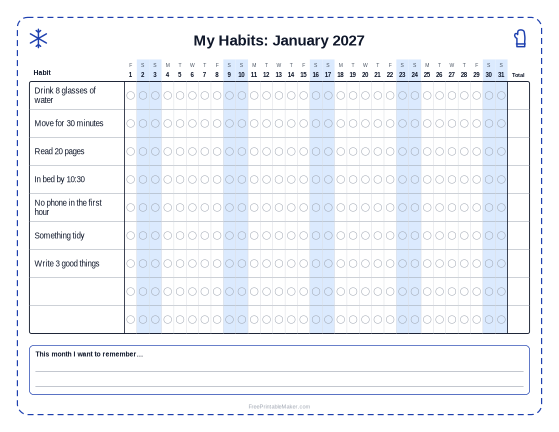
Choose the month and year, then type one habit per line, up to fifteen. The dates and weekdays are filled in for you, with weekends shaded so you can see the rhythm of each week. A total column on the right gives you somewhere to add up each row at the end of the month.
How many habits should you track?
Fewer than you think. Three to five is a good number for most people. Tracking twelve things tends to feel like a job, and missing one starts to feel like failing. You can always add a habit next month, once this month's are becoming automatic. The blank rows at the bottom are there for anything that comes up along the way.
Keeping it going
- Put it where you'll see it: on the fridge, beside the bed or inside a planner.
- Tick the box at the same time each day.
- If you miss a day, leave it empty and carry on. One gap doesn't undo a good month.
At the end of the month, look at the totals and decide what to keep, change or drop.