
Why taking away feels harder
Children usually find subtraction harder than addition, and there's a good reason. Adding lets them count forwards, which they have done since they were toddlers. Subtracting means holding a number in mind while counting backwards or removing things. A little extra time with real objects pays off.
Act it out first
Before handing over the sheet, try this with ten small crackers:
- Put seven on the table and say the number together.
- Eat two, or slide them away.
- Count what's left, then say the whole sentence: seven take away two is five.
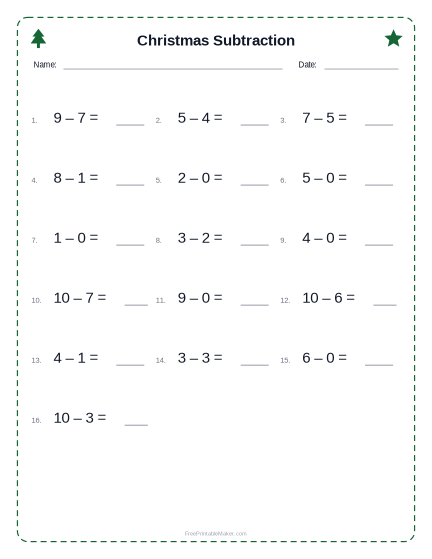
Then write that sentence down and show that it looks just like a line on the worksheet.
Common mistakes to look for
A child who writes 5 - 2 = 7 has added out of habit, so point to the sign and ask what it tells them to do. A child who is off by one is often counting the starting number as the first step back. Using counters instead of fingers usually clears that up.
Keeping it right for your child
Numbers run up to 10 and answers never drop below zero. For a gentler start, lower "Largest number" to 5. When your child is comfortable, change the operation to Addition & Subtraction so they have to read the sign on every problem. That small change is a real step up, and it's what first grade will ask of them.