
Start with the small letters
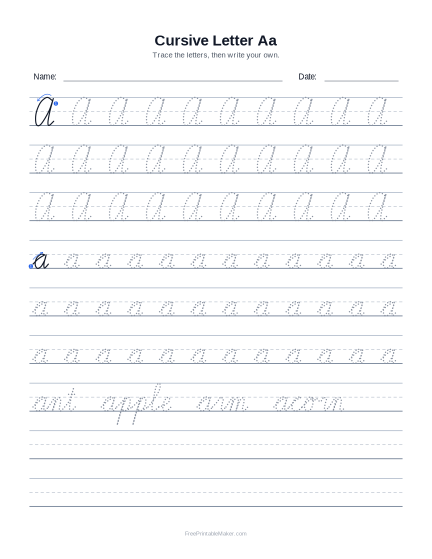
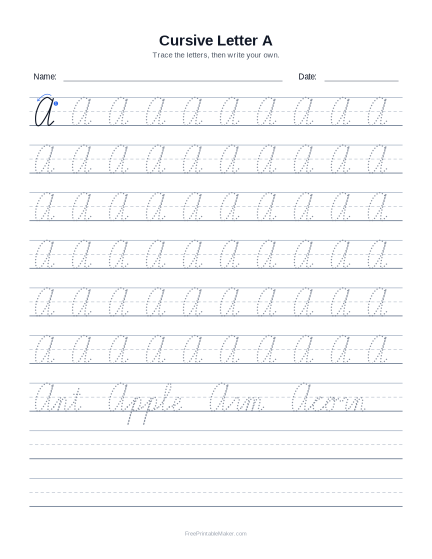
Lowercase letters make up nearly everything a child will write, and they are what joining is all about. It makes sense to spend most of your cursive time here and to bring in capitals later. These sheets use the Large row size, because big arm movements are easier to control when a shape is new.
Which letters come first?
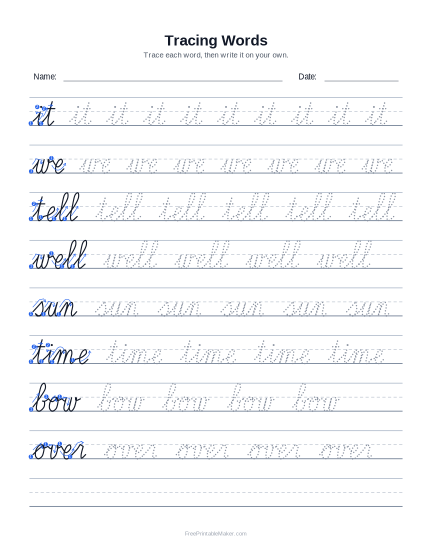
Start with i, t, u and w. They all begin with the same smooth upward curve and need almost no new skill. Then move on to e and l, and you already have enough to write real words such as "tell", "well" and "little".
Save f, z and q for last. Those three loop below the line and change direction, which makes them the hardest to remember.
How to practice a letter
- Say the movement aloud while tracing, such as "up, down, up and away".
- Trace the solid first copy with a finger before picking up a pencil.
- Trace the dotted row slowly, without lifting the pencil between copies if you can.
- Finish in the empty row, with nothing to follow.
Keep sessions short
Ten minutes a day works better than one long session a week. Stop while handwriting is still neat, because tired practice builds untidy habits. Holding the pencil loosely and turning the paper slightly helps the letters lean naturally. Left-handed children can turn the page the other way, so their hand doesn't cover what they have just written.