
The capitals children find strange
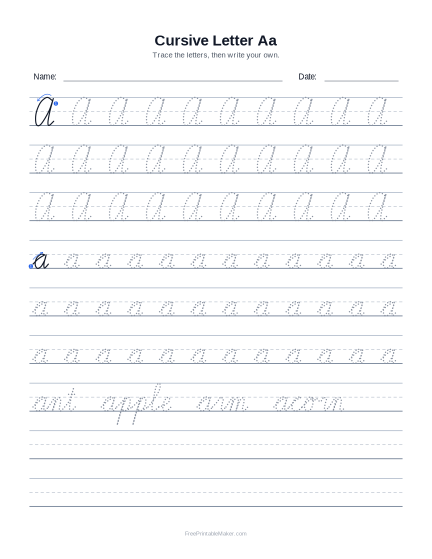
A cursive Q can look like the number 2. A capital I or J starts with a large loop, and some children don't recognize a cursive G or S at all. Many adults can't remember how to write them either! That's why capitals deserve their own practice, once lowercase letters are going well.
Group them by how they begin
- Letters that begin with a small hook: H, K, M, N, Q, U, V, W, X, Y, Z.
- Letters that begin with a circle shape: A, C, E, G, O.
- Letters that begin with a loop: I, J, L, S.
- Letters with a separate top bar or stem: B, D, F, P, R, T.
Learning a family at a time is far easier than memorizing 26 unrelated shapes.
Capitals that stand alone
Some capitals run straight on into the next letter, while others stop. On these sheets, letters such as B, D, F, O, P, T, V and W finish on their own, and the next letter starts fresh beside them. Teaching programs differ a little on this, so follow your school's handwriting scheme where it's different.
Practice with real words
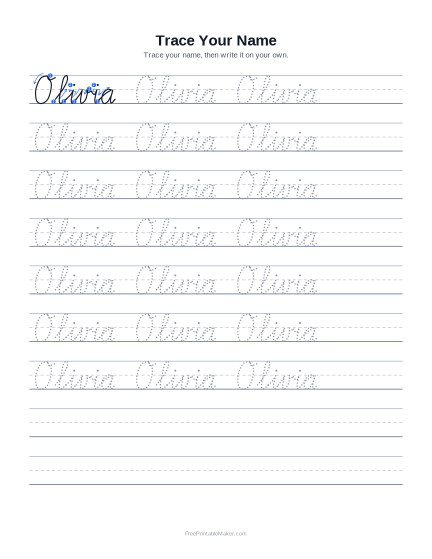
Once a shape feels comfortable, use it where it matters: names, months and places. Switch the mode to "My own words" and try the class's first names, with the cursive option on. A page of names is much more motivating than a page of a single capital letter.