
The signature children want to learn
For many children, writing their own name is the whole reason to learn cursive. It feels grown-up, and it's a skill they will use all their lives. A name is also a small project: a handful of letters to master, one of them a capital, with a clear finish line.
How to make one
Type the name into the box. Accents are simplified, so José traces as Jose. If the name is long, the letters shrink a little to fit the row. Names of up to twenty characters will fit, which is enough for a first and last name together.
Practising a name well
- Look first: point out where the letters connect, and where the pen lifts.
- Start with the capital on its own if it's a difficult one.
- Trace the name slowly on the solid first row, following the arrows.
- Move on to the dotted rows, then write it alone in the empty rows at the bottom.
Ideas for the classroom
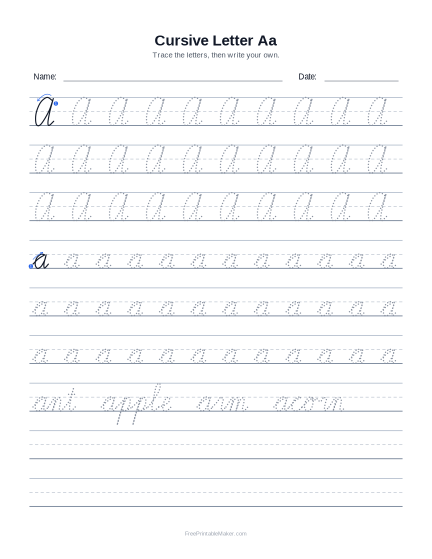
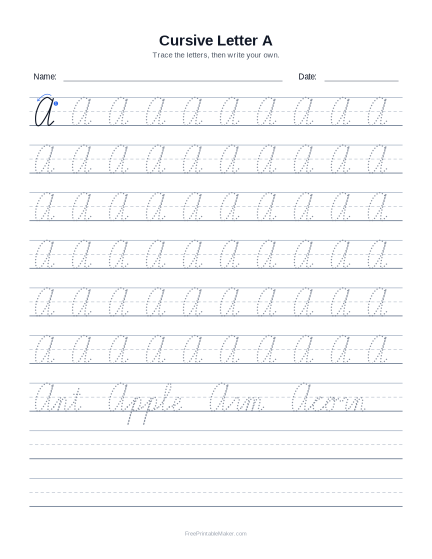
Make a sheet for each child at the start of the year and keep the first attempt, then compare it with a new one in June. Children can also trace a friend's name for a birthday card. For letters that keep going wrong, go back to the single letter pages, and then return to the name.
Prefer print letters? Turn the cursive option off for a standard name tracing sheet.